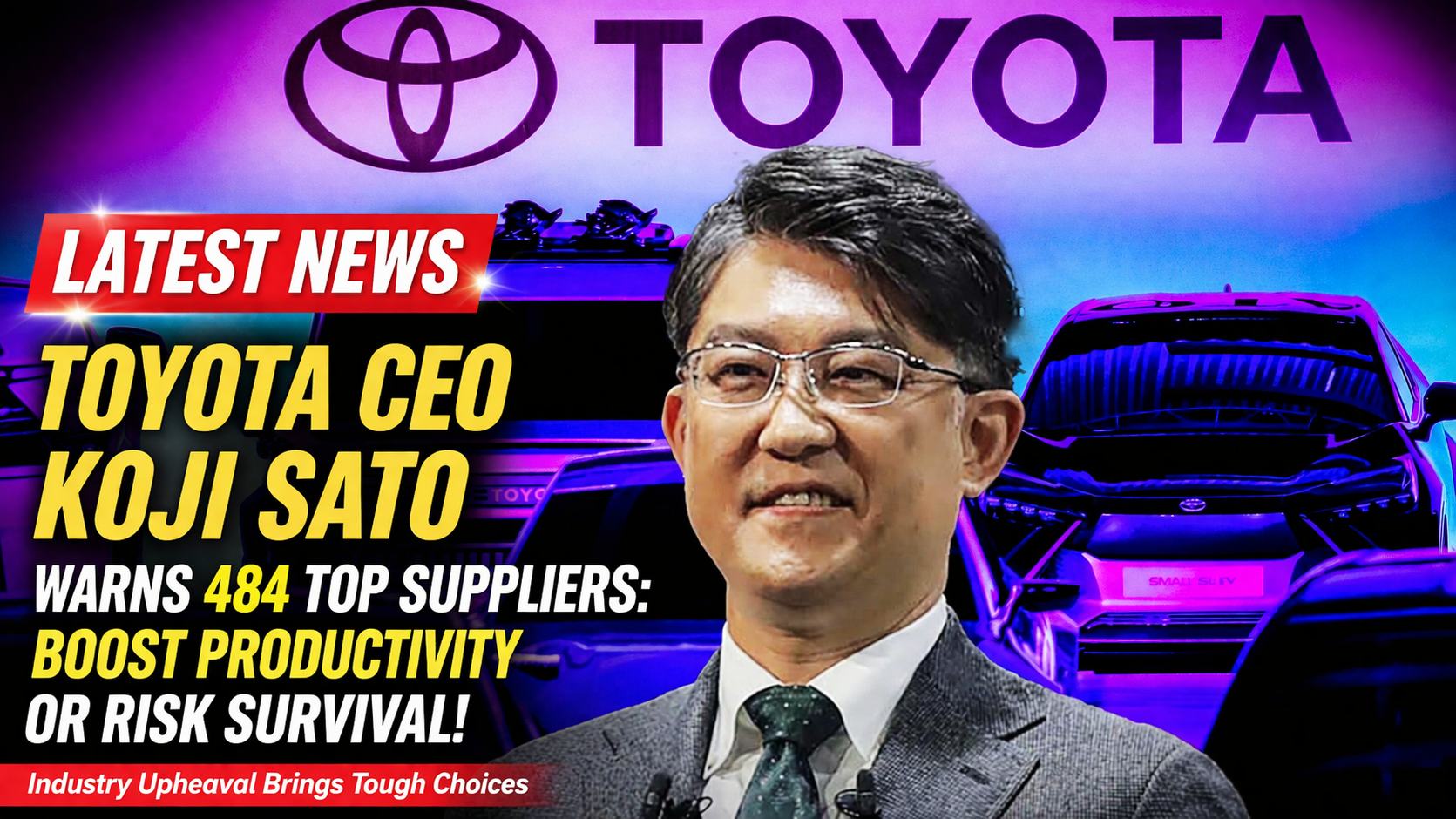
The global auto industry is going through one of its biggest transformations in decades. From electric vehicles to advanced software and digital manufacturing, everything is changing fast. In the middle of this shift, Koji Sato, CEO of Toyota, has sent a strong and clear message to the company’s 484 top suppliers: improve productivity or risk being left behind.
This is not just a simple warning — it reflects a deeper change happening inside Toyota and across the entire automotive ecosystem.
Why This Warning Matters Now
For decades, Toyota has been known for its strong supplier network and efficient production system, often called the Toyota Production System. But today, the rules of the game are changing.
The rise of electric vehicles (EVs), automation, and digital technology is forcing automakers and suppliers to rethink how they operate. Traditional parts like engines and transmissions are becoming less important, while batteries, software, and electronics are taking center stage.
In this new environment, productivity is no longer just about making parts faster — it’s about being smarter, more flexible, and more innovative.
The Industry Upheaval Explained
The “industry upheaval” mentioned by Koji Sato refers to multiple big shifts happening at the same time:
1. Electric Vehicle Transition
Automakers are rapidly moving from petrol and diesel cars to EVs. This means many traditional suppliers need to completely change what they produce.

2. Software-Driven Cars
Modern vehicles are becoming like computers on wheels. Features like autonomous driving, connectivity, and over-the-air updates require strong software capabilities.
3. Cost Pressure
EV production is expensive, especially because of batteries. Automakers like Toyota are under pressure to reduce costs while staying competitive.
4. Global Competition
Companies like Tesla and Chinese EV makers are pushing the industry forward with aggressive pricing and fast innovation.
Because of all this, Toyota cannot afford inefficiencies in its supply chain.
What Koji Sato Is Asking Suppliers to Do
The message from Koji Sato is direct but practical. He wants suppliers to:
- Increase efficiency in production
- Reduce costs without compromising quality
- Adopt new technologies like automation and AI
- Improve flexibility to quickly adapt to new demands
- Focus on innovation, especially in EV-related components
In simple terms, suppliers need to become faster, smarter, and more future-ready.

A Shift in Toyota’s Strategy
Toyota has traditionally been cautious about fully switching to electric vehicles. However, under Koji Sato’s leadership, the company is accelerating its EV plans.
This shift requires a completely different supply chain. For example:
- EVs need fewer moving parts than traditional cars
- Batteries and electronics are now the most critical components
- Software integration is becoming essential
Because of this, Toyota is pushing its suppliers to evolve along with it.
The Risk for Suppliers
Not all suppliers will be able to keep up with these changes.
Some risks they face include:
- Losing contracts with Toyota
- Becoming irrelevant in the EV ecosystem
- Being replaced by more advanced or tech-focused companies
This is why Koji Sato’s warning is being taken very seriously in the industry.

Impact on the Global Auto Industry
This move by Toyota is not happening in isolation. It reflects a global trend.
Other major automakers are also:
- Reducing the number of suppliers
- Choosing partners with strong technology capabilities
- Demanding higher efficiency and lower costs
This means the entire supplier ecosystem is under pressure to transform.
🇯🇵 Why This Is Important for Japan
Toyota is one of Japan’s most important companies, and its supplier network includes hundreds of businesses across the country.
If these suppliers fail to adapt:
- It could impact jobs and the economy
- Smaller companies may struggle to survive
- Japan’s position in the global auto market could weaken
That’s why this warning is not just about business — it has national importance as well.

The Opportunity Hidden in the Challenge
While the situation sounds tough, it also brings new opportunities.
Suppliers who adapt can:
- Enter the fast-growing EV market
- Work on advanced technologies like batteries and AI
- Build long-term partnerships with global automakers
In fact, this transformation could create a stronger and more competitive supply chain in the long run.
Final Thoughts
The message from Koji Sato is clear: change is not optional anymore.
The automotive industry is evolving faster than ever, and only those who can keep up will survive. For Toyota’s 484 top suppliers, this is a moment of truth.
They must decide whether to:
- Stay in their comfort zone and risk falling behind
- Or embrace change and become part of the future
One thing is certain — the road ahead will not be easy, but it will define the next era of the global auto industry.