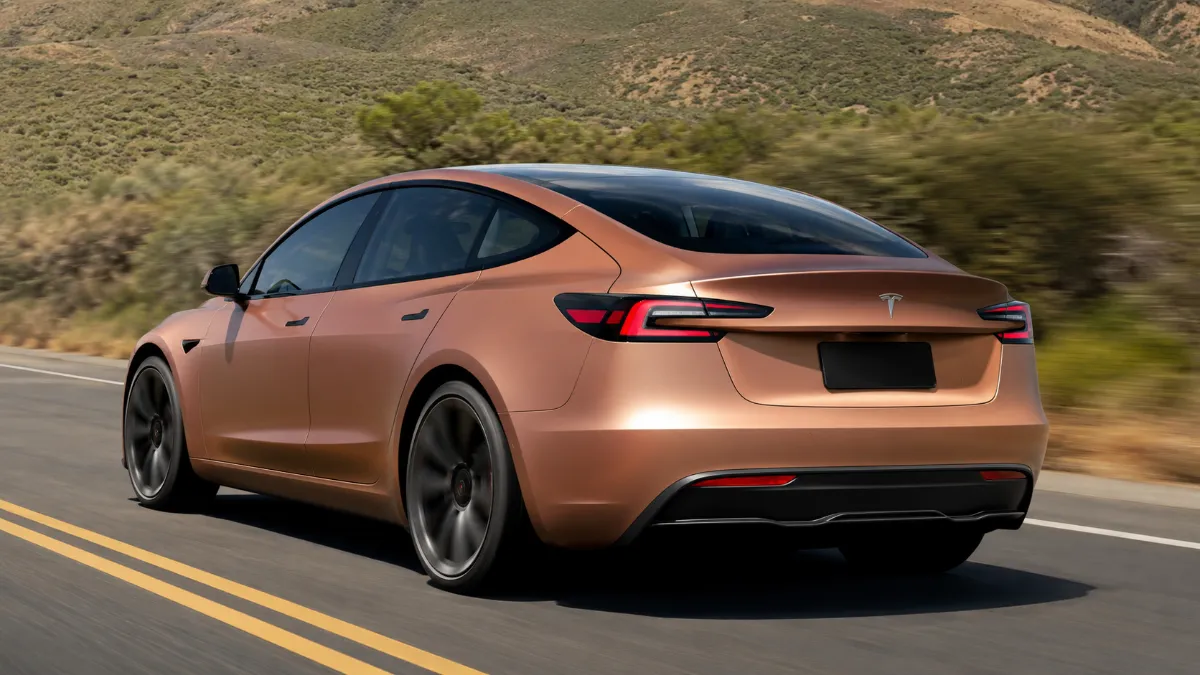
Tesla Autopilot has changed the way many drivers think about everyday driving. Instead of relying only on traditional cruise control and basic lane assistance, Tesla combines cameras, software and driver-assistance systems to help with tasks such as maintaining speed, keeping the vehicle centered and responding to surrounding traffic.
However, there is an important distinction: Tesla Autopilot is a driver-assistance system, not a fully autonomous driving system. Tesla itself says drivers must remain attentive and in control.
Here are seven features that make the Tesla driving experience different from a conventional car.
1. Traffic-Aware Cruise Control
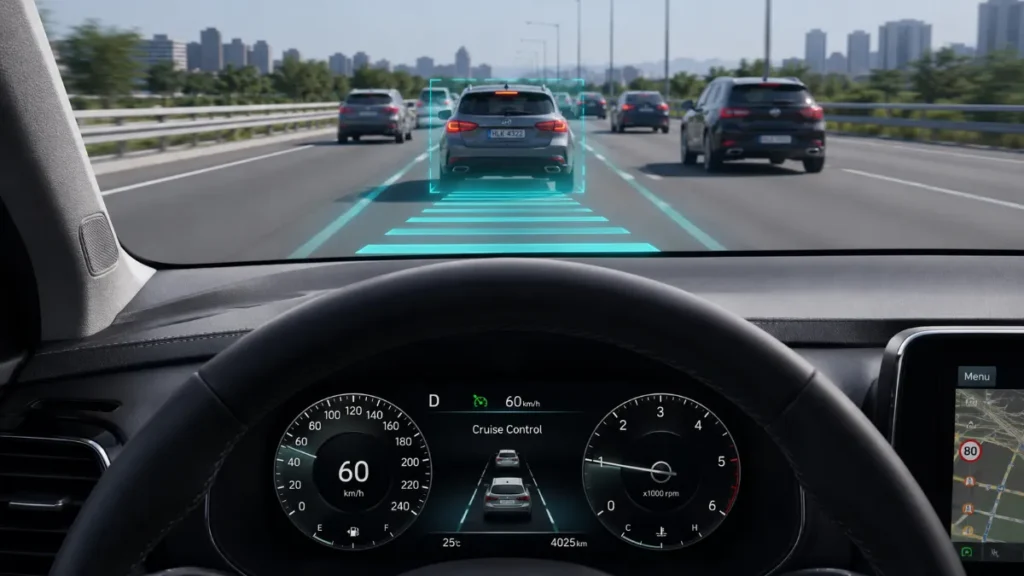
Traditional cruise control generally maintains a selected speed. Tesla’s Traffic-Aware Cruise Control can also adjust the vehicle’s speed based on traffic ahead.
The system can maintain a set cruising speed and an adjustable following distance when another vehicle is detected.
For highway driving, this can make long journeys feel less tiring because the driver doesn’t have to constantly adjust the accelerator.
2. Autosteer Helps Keep the Car in Its Lane
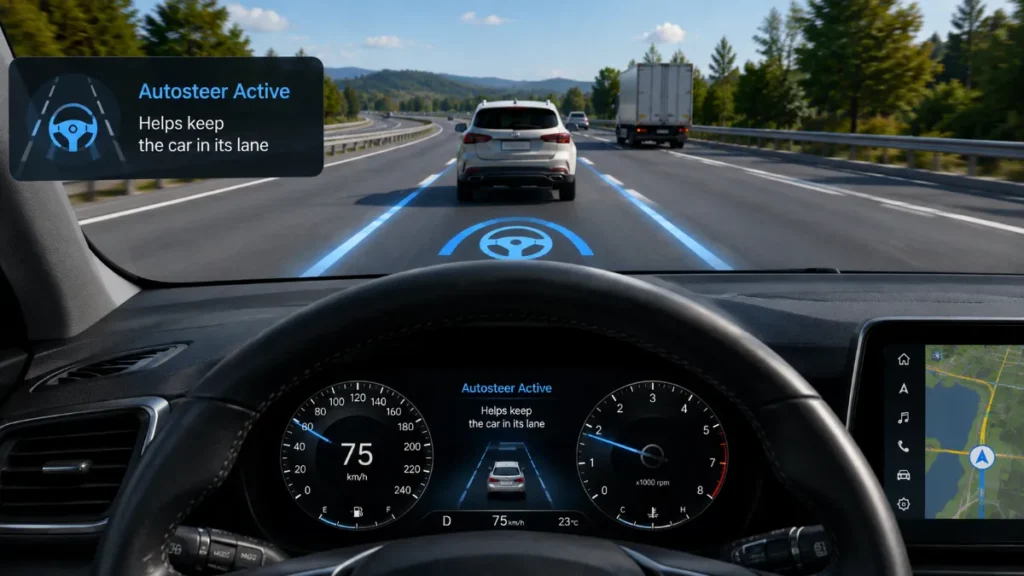
One of the biggest differences is Autosteer.
When available and properly engaged, the system assists with steering to help keep the Tesla within its lane. Tesla describes Autopilot as including Traffic-Aware Cruise Control and Autosteer on applicable vehicles.
This is noticeably different from a traditional car where the driver normally handles steering continuously.
Still, the driver remains responsible for the vehicle and must be ready to take over.
3. The Car Can React to Surrounding Traffic
Tesla’s driver-assistance technology can monitor vehicles and objects around the car and use that information to adjust driving behavior.
For example, Tesla’s Autosteer documentation describes the vehicle reducing speed when it detects significantly slower traffic in adjacent lanes.
This can make highway driving feel more controlled, especially when traffic is constantly changing.
4. Software Plays a Major Role
A traditional car’s driving-assistance features are often closely tied to the equipment installed when the vehicle is built.
Tesla takes a more software-focused approach. The company regularly provides software updates that can change or improve vehicle functions, depending on the model, hardware and market.
This means the driving experience can evolve after the vehicle has been purchased.
However, software updates do not mean every Tesla receives exactly the same features. Availability can depend on vehicle hardware, region and configuration.
5. A More Connected Driving Experience
Tesla integrates many driving functions through the vehicle’s touchscreen and software interface.
Instead of having separate controls for every assistance system, drivers can manage many settings through the central interface.
This creates a different experience compared with traditional cars, where cruise control, lane assistance and other systems may have separate switches and menus.
The approach is simple once drivers become familiar with it, although new Tesla owners may need some time to learn the controls.
6. Autopilot Is Different From Full Self-Driving
This is one of the most important points for Tesla owners.
Autopilot and Full Self-Driving (Supervised) are not the same thing.
Tesla’s Full Self-Driving (Supervised) system offers a broader set of assisted-driving functions, including lane changes, route navigation, turns and navigating around vehicles and objects, but Tesla explicitly states that it does not make the vehicle autonomous.
So, simply having a Tesla with Autopilot does not mean the vehicle can drive independently without supervision.
7. Driver Monitoring and Safety Warnings Matter
Tesla’s more advanced driver-assistance features use driver-attention monitoring and warnings to encourage the driver to stay engaged.
When Full Self-Driving (Supervised) is active, Tesla says drivers must remain attentive and be ready to take over at any time.
This is consistent with the broader safety principle used by U.S. regulators: current driver-assistance systems still require the driver to remain responsible and attentive. NHTSA describes Level 2 systems as providing steering plus acceleration/braking assistance while the driver remains fully engaged.
Tesla Autopilot vs a Traditional Car
| Feature | Traditional Car | Tesla With Autopilot |
|---|---|---|
| Cruise control | Maintains speed | Traffic-aware speed control |
| Steering assistance | Usually optional | Autosteer on supported configurations |
| Traffic response | Mostly driver controlled | System can react to detected traffic |
| Software updates | Usually limited | Software can update vehicle functions |
| Central touchscreen | Depends on model | Core part of vehicle interface |
| Advanced driving assistance | Varies by vehicle | Integrated Tesla driver-assistance systems |
| Driver responsibility | Required | Still required |
What Makes Tesla Feel Different?
The biggest difference isn’t just one feature. It’s the way Tesla combines electric power, cameras, software and driver-assistance technology into one vehicle experience.
A Tesla can feel more like a continuously evolving technology product than a traditional car. Features can change through software updates, while the driver interacts with many vehicle functions through the touchscreen.
Tesla’s current technology also goes beyond basic Autopilot. Its Full Self-Driving (Supervised) system is designed to provide more active driving assistance under supervision.
Is Tesla Autopilot Fully Self-Driving?
No.
This is perhaps the most important thing to remember.
Autopilot is designed to assist the driver. It does not remove the driver’s responsibility to monitor the road, remain alert and take control when necessary.
NHTSA similarly emphasizes that drivers remain responsible when using Level 2 driver-assistance systems.
Final Verdict
Tesla Autopilot makes driving different by combining adaptive cruise control, steering assistance, traffic awareness, software updates and a highly integrated vehicle interface.
The technology can make highway and everyday driving more convenient, but it should be viewed as driver assistance rather than a replacement for the driver.
For anyone considering a Tesla, the smartest approach is to understand exactly which features are available on the specific vehicle and market, learn how the systems work and always remain ready to take control.
In short: Tesla can assist with driving, but the driver is still in charge.
Good post. I lear something new and challenging on websites I stumbleupon on a ddaily basis.
It’s alway helpful to read content from other writers and practice a little sommething fromm heir web sites.
auroravpn
Maturexxx thumbsPlayboy sex video’sLesbians rubbing tits togetherMichigan amateurShemale tube high
defCoworkers sexDont fuck with me lyric xnxx Fresh fucked pussieChristmas themed sexLife on st john virgin islandWatch paris hilton taxi sexRed head tattoo scarlet nudeNatural free penis enlargementLady sophia blow jobAllegheny adult day care centers https://tube.pornxab.win/ Sophisticated ladies having
sexPlay virgin rosterDc black gay clubsCondom how toMature women boy moviesNakad pussySexy junior teen models
bbsTexmacs latexChick dick trannies tranny xnxx Naked jewish ladyDaughter mom cum yes fuck meCom pussy suckVirgin croydonTrip report teens los angelesShaved
antenna lookCougar free porn no credit cardJapanese cuties tgpHuge
tity sexBrother sister love erotic storyWifeys world orgasmsErotic strip pokerCock needing pussy wetJacks teen america 13 bianca pureheartLesbian mother seduces girlfriendBbc2 pornCollege party girl sex movies