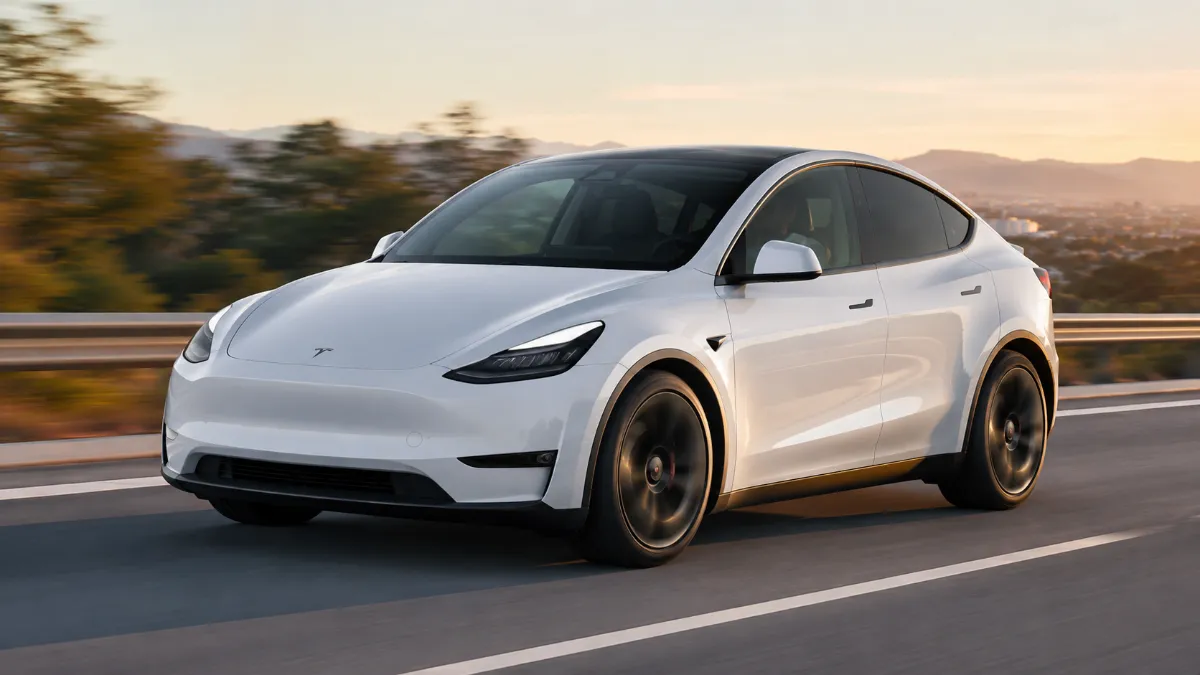
Tesla’s driver-assistance technology can be confusing, especially because Autopilot and Full Self-Driving (FSD) Supervised) are often mentioned together. While both systems are designed to make driving easier, they are not the same thing.
The biggest difference is the level of driving assistance. Standard Autopilot focuses mainly on speed control and steering assistance, while FSD (Supervised) is designed to handle a much wider range of driving situations under the driver’s active supervision.
And there is one point every Tesla owner should remember: neither system makes the car fully autonomous.
Tesla Autopilot vs FSD: Quick Comparison
| Feature | Tesla Autopilot | FSD (Supervised) |
|---|---|---|
| Traffic-Aware Cruise Control | ✅ Yes | ✅ Yes |
| Autosteer | ✅ Yes | ✅ Yes |
| Lane keeping | ✅ Yes | ✅ Yes |
| Automatic lane changes | Limited/depends on configuration | ✅ Yes |
| City-street assistance | Limited | ✅ Designed for broader scenarios |
| Turns at intersections | Limited | ✅ Yes |
| Roundabouts | Limited | ✅ Yes |
| Navigation assistance | Limited | ✅ Yes |
| Automatic parking | Depends on vehicle/package | ✅ Available where supported |
| Summon features | Depends on configuration | ✅ Available where supported |
| Driver supervision | Required | Required |
| Fully autonomous | ❌ No | ❌ No |
Feature availability can vary according to the Tesla model, hardware, software version, country and vehicle configuration.
What Is Tesla Autopilot?
Tesla Autopilot is the company’s standard advanced driver-assistance system.
It is designed to reduce some of the workload involved in driving, particularly on roads where the system can operate appropriately.
Two of its core functions are:
Traffic-Aware Cruise Control
Traffic-Aware Cruise Control can maintain a selected speed and adjust the vehicle’s speed based on traffic ahead.
Instead of constantly pressing the accelerator and brake, the system can help maintain a suitable following distance.
Autosteer
Autosteer assists with steering to help keep the Tesla within its lane while working together with Traffic-Aware Cruise Control.
Tesla describes Autopilot as a driver-assistance system rather than an autonomous-driving system.
What Is Full Self-Driving (Supervised)?
FSD (Supervised) is Tesla’s more advanced driver-assistance package.
Rather than concentrating mainly on highway speed and lane assistance, FSD (Supervised) is designed to provide assistance across a wider range of roads and driving situations.
Tesla says FSD (Supervised) can, under supervision:
- Make left and right turns
- Change lanes
- Follow a navigation route
- Select roadway forks
- Navigate around other vehicles and objects
- Handle intersections
- Navigate roundabouts
- Enter and exit highways
- Operate on residential and city streets
The exact features available depend on the vehicle, software, hardware and market.
The Biggest Difference: Where They Can Assist
This is perhaps the easiest way to understand the difference.
Autopilot is primarily a basic driver-assistance package.
It can help with speed and steering, but the driver remains responsible for the complete driving task.
FSD (Supervised) is designed to take a much more active role.
For example, Tesla says FSD (Supervised) can attempt to drive to a destination while negotiating turns, intersections, roundabouts and highways.
That makes FSD feel much closer to an automated driving experience, even though it still requires an attentive human driver.
Does FSD Mean the Tesla Can Drive Itself?
No.
This is the most important clarification.
Despite its name, Tesla’s FSD (Supervised) system does not make the vehicle fully autonomous.
Tesla explicitly says currently enabled FSD (Supervised) features require active driver supervision and do not make the vehicle autonomous.
The driver must remain attentive and be ready to take control whenever necessary.
So the name Full Self-Driving should not be interpreted as “the driver can sleep or stop paying attention.”
FSD Is More Active, But the Driver Is Still in Charge
When FSD (Supervised) is engaged, the Tesla can perform considerably more of the driving sequence.
For example, during a trip, the system may:
- Follow the planned route.
- Maintain the vehicle’s path.
- Adjust speed.
- Change lanes.
- Approach an intersection.
- Make a turn.
- Continue toward the destination.
This can make a long drive feel less demanding.
But the driver still has to monitor the road and the vehicle.
Tesla’s owner’s manual warns that driver intervention may be required in situations such as construction zones, narrow roads and complex intersections.
What About Automatic Lane Changes?
Automatic lane changes are another major difference.
Basic Autopilot is focused on keeping the vehicle moving within its lane while maintaining speed and distance.
FSD (Supervised) can provide more advanced route-based driving assistance, including lane changes needed to follow navigation.
Tesla says FSD (Supervised) can move the vehicle into a neighboring lane while monitoring surrounding traffic through its camera system.
This is particularly useful on highways when the route requires the vehicle to move across lanes.
City Driving Is Another Major Difference
Traditional Autopilot is most useful in situations where lane markings and road conditions are suitable for its available functions.
FSD (Supervised) is designed for a broader variety of roads.
Tesla says FSD (Supervised) is intended to work on residential streets and city roads as well as highways.
This broader operating environment is what makes FSD noticeably different from standard Autopilot.
What Happens at Intersections?
Intersections are another area where FSD (Supervised) goes beyond the basic Autopilot experience.
Tesla says FSD (Supervised) can attempt to:
- Stop at intersections
- Negotiate intersections
- Make left turns
- Make right turns
- Navigate roundabouts
- Continue along a selected route
The system still needs driver supervision because unexpected road conditions can require immediate human intervention.
Autopilot vs FSD: Parking and Summon
The differences are not limited to normal road driving.
Depending on the vehicle and market, Tesla’s more advanced package can also provide parking and Summon-related functions.
Tesla currently lists:
Autopark
Autopark can assist with parallel and perpendicular parking on supported vehicles.
Actually Smart Summon
Actually Smart Summon can navigate the vehicle through more complex parking environments to come toward the owner.
Dumb Summon
Dumb Summon can move the vehicle into or out of a tight space using the Tesla app.
Availability depends on vehicle configuration and region.
Tesla Autopilot vs FSD: Technology
Both systems rely heavily on Tesla’s vehicle cameras and onboard computing.
Tesla’s current documentation describes cameras around the vehicle being used to build an understanding of the surrounding environment for FSD (Supervised).
The software then processes this information to determine how the vehicle should respond.
Tesla can also improve its driver-assistance features through over-the-air software updates.
That means the experience can change as newer software becomes available.
Why Does Hardware Matter?
Not every Tesla has exactly the same capabilities.
Feature availability can depend on:
- Tesla model
- Model year
- Self-driving computer
- Cameras
- Software version
- Vehicle configuration
- Country or region
- Regulatory approval
Tesla specifically notes that FSD (Supervised) features vary according to vehicle configuration, hardware, software version and location.
This is important when buying a used Tesla.
Two cars that look almost identical may not have exactly the same driver-assistance capabilities.
How Much Does FSD Cost?
Tesla currently lists FSD (Supervised) at $99 per month in the United States, although pricing and availability can change.
Tesla also notes that some vehicles may require prerequisite hardware upgrades before they can access FSD (Supervised).
The subscription is therefore something buyers should check against their exact vehicle rather than assuming every Tesla has the same package.
Is FSD Worth It Over Autopilot?
That depends heavily on how you drive.
Autopilot may be enough if you:
- Mostly drive highways
- Want basic cruise-control assistance
- Want steering assistance
- Prefer a simpler driver-assistance system
- Do not regularly need advanced navigation assistance
FSD (Supervised) may be more attractive if you:
- Drive frequently in cities
- Want navigation-based driving assistance
- Want automatic lane changes
- Want assistance with turns
- Want broader driving assistance
- Want access to Tesla’s more advanced driver-assistance features
The decision ultimately comes down to whether the additional convenience justifies the additional cost.
Safety: The Most Important Difference Isn’t a Feature
Whether you’re using Autopilot or FSD, the driver remains responsible.
Tesla says drivers must remain attentive and ready to take over.
This means drivers should never:
- Use a phone while driving
- Sleep while the system is active
- Assume the vehicle will always recognize every hazard
- Ignore road signs
- Stop watching traffic
- Treat FSD as a completely autonomous chauffeur
Driver assistance can reduce workload, but it does not remove the need for responsible driving.
Tesla Autopilot vs FSD for Long Highway Trips
For long highway journeys, both systems can make driving easier.
Autopilot can help maintain speed, distance and lane position.
FSD (Supervised) adds more active assistance, particularly when the route requires lane changes, turns or other navigation decisions.
For a driver who regularly travels hundreds of miles, the additional capability can make a noticeable difference.
But even on an apparently easy highway, unexpected events can happen quickly.
The driver must remain ready.
What About Software Updates?
Software is one of the most important parts of Tesla’s approach.
Tesla regularly provides over-the-air updates that can improve existing functions or add new capabilities.
Tesla says FSD (Supervised) vehicles can receive future improvements through software updates, although the features available to a particular vehicle depend on its hardware and region.
This means a Tesla’s driver-assistance experience can evolve over time.
Used Tesla Buyers Should Pay Attention
If you’re considering a used Tesla, don’t simply assume that the vehicle has the latest FSD features.
Check:
- Vehicle model
- Model year
- Self-driving computer
- Camera hardware
- Current software
- Included package
- FSD subscription status
- Regional availability
Tesla provides a way to check software and FSD-related information through the vehicle’s touchscreen.
This can help prevent surprises after purchasing a used vehicle.
Final Verdict: Autopilot or FSD?
The simplest explanation is this:
Tesla Autopilot = basic driver assistance.
Tesla FSD (Supervised) = a much broader driver-assistance package designed to handle more of the driving task under supervision.
Autopilot is useful for maintaining speed, following traffic and assisting with steering. FSD (Supervised) goes further by adding navigation-based driving assistance, lane changes, turns, intersections and other capabilities where supported.
But neither system currently turns a Tesla into a fully autonomous vehicle.
For most owners, the real choice is not between “self-driving” and “normal driving.” It is between different levels of driver assistance.
And regardless of which system is active, the person in the driver’s seat remains the final decision-maker.
Tesla Autopilot vs FSD: At a Glance
| Category | Autopilot | FSD (Supervised) |
|---|---|---|
| Cruise control | ✅ | ✅ |
| Steering assistance | ✅ | ✅ |
| Lane keeping | ✅ | ✅ |
| Navigation-based driving | Limited | ✅ |
| Automatic lane changes | Limited/varies | ✅ |
| City-road assistance | Limited | ✅ |
| Turns | Limited | ✅ |
| Intersections | Limited | ✅ |
| Roundabouts | Limited | ✅ |
| Parking assistance | Vehicle-dependent | ✅ |
| Summon | Vehicle-dependent | ✅ where supported |
| Driver attention | Required | Required |
| Fully autonomous | ❌ | ❌ |
Features vary by model, hardware, software version and market.
Frequently Asked Questions
Is Tesla Autopilot the same as FSD?
No. Autopilot is the standard driver-assistance system, while FSD (Supervised) provides a broader set of assisted-driving capabilities.
Can Tesla FSD drive without a driver?
No. Tesla says FSD (Supervised) requires active driver supervision and does not make the vehicle autonomous.
Does every Tesla have FSD?
No. Availability depends on the vehicle, hardware, software and region.
Can Autopilot change lanes automatically?
Capabilities vary by package, vehicle and market. More advanced navigation-based lane changes are part of FSD (Supervised).
Is FSD a monthly subscription?
Tesla currently lists FSD (Supervised) at $99 per month in the U.S., subject to change.
Do I still need to watch the road with FSD?
Yes. Active driver supervision is required.
Bottom line: If you want basic highway assistance, Autopilot covers the essentials. If you want Tesla’s more advanced navigation and driving assistance, FSD (Supervised) is the more capable option—but it remains a supervised driver-assistance system, not a fully autonomous car.