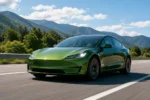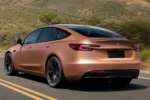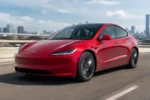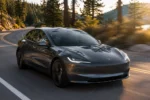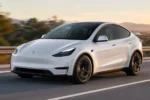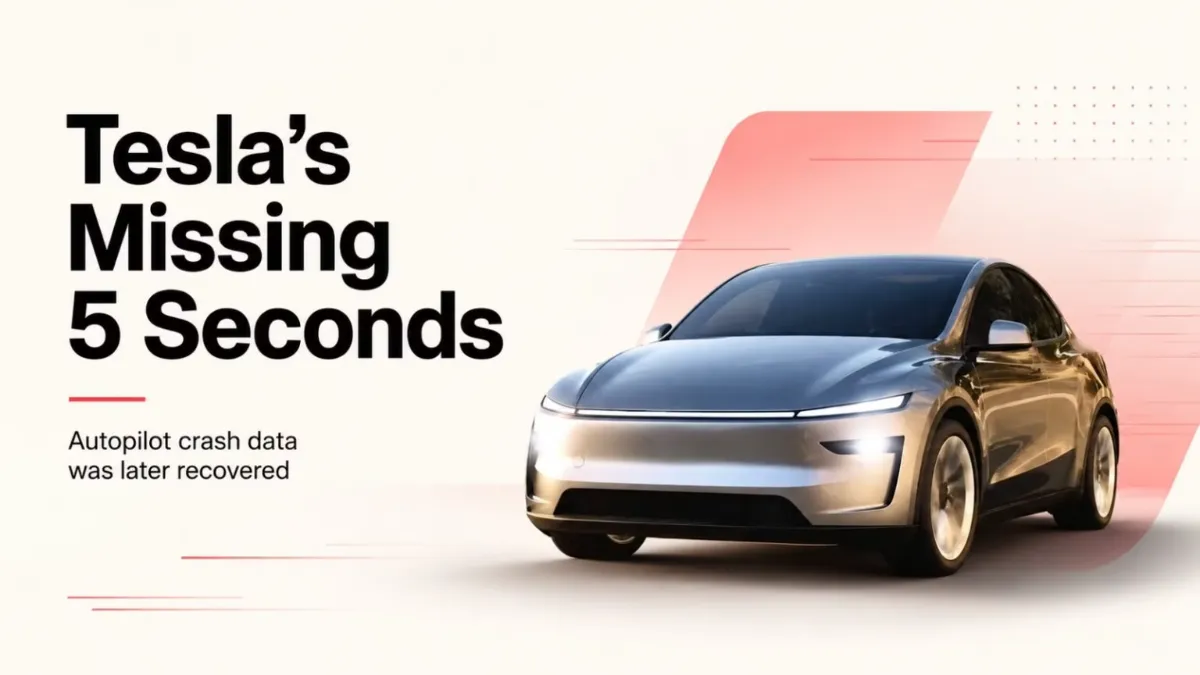
Tesla Autopilot remains one of the most talked-about driver-assistance systems in the automotive world. In 2026, however, the biggest story is not simply about adding more automation. Tesla continues to improve its software, cameras, driver monitoring and assisted-driving behavior while keeping the driver responsible for the vehicle.
It is also important to separate Tesla Autopilot from Full Self-Driving (Supervised). Tesla describes its currently enabled Autopilot and FSD features as requiring active driver supervision; they do not turn the vehicle into an autonomous car.
Tesla Autopilot 2026: What’s New?

Tesla’s driver-assistance technology continues to evolve through software updates rather than traditional mechanical upgrades. Depending on the Tesla model, hardware configuration, market and software version, drivers can receive improvements to existing assistance features and access to additional FSD (Supervised) capabilities.
Tesla’s current FSD (Supervised) system is designed to provide more active guidance, including steering, lane changes, turns and navigation assistance, while the driver remains responsible for monitoring the road.
Key areas of development in 2026
- Improved assisted-driving behavior
- Better camera-based environmental perception
- More advanced lane-change assistance
- Enhanced navigation capabilities
- Improved traffic and intersection handling
- Driver-attention monitoring
- Over-the-air software improvements
- Expanded FSD (Supervised) functionality in supported markets
The exact functions available can vary by Tesla model, hardware and region.
How Tesla Autopilot Works
Tesla Autopilot uses cameras and software to understand the road environment around the vehicle. The system can identify surrounding vehicles and other road users and use that information to provide steering, acceleration and braking assistance.
Tesla’s current driver-assistance systems are designed to work with an attentive driver rather than replace one. Tesla’s owner’s manual specifically warns drivers to remain attentive and be ready to take immediate control.
This is an important distinction because the word Autopilot can sometimes give the impression that the car can drive itself without supervision.
It cannot.
Autopilot vs Full Self-Driving (Supervised)
These two names are often confused.
Tesla Autopilot
The standard Autopilot package focuses on core driving assistance such as:
- Traffic-Aware Cruise Control
- Steering assistance through Autosteer
- Maintaining speed and following distance
- Lane-related driving assistance
Tesla says Traffic-Aware Cruise Control maintains the vehicle’s speed and an adjustable following distance from the vehicle ahead.
Full Self-Driving (Supervised)
FSD (Supervised) goes further. Depending on availability and vehicle configuration, it can assist with:
- Lane changes
- Left and right turns
- Navigation
- Following road forks
- Intersections
- Roundabouts
- Parking-related maneuvers
- Responding to surrounding traffic
Tesla’s Model 3 owner’s manual says FSD (Supervised) can navigate to a destination, make turns, negotiate intersections and roundabouts, and enter or exit highways.
But the word Supervised matters.
The driver must remain engaged and ready to intervene.
Tesla’s Camera-Based Approach
One of the defining characteristics of Tesla’s approach is its reliance on cameras and computer vision for its driver-assistance system.
The vehicle continuously processes information from its cameras and software to understand lanes, vehicles, pedestrians, road markings and other objects.
Tesla’s current Model Y, for example, lists front-facing cameras as part of its driver-assistance technology and offers FSD (Supervised) as an available advanced driver-assistance package.
This camera-focused strategy allows Tesla to improve vehicle behavior through software updates without requiring owners to replace the entire vehicle.
Safety Features Work Alongside Autopilot
Autopilot is only one part of Tesla’s wider safety technology.
Tesla vehicles also include active safety features designed to help prevent or reduce the severity of collisions.
These include:
- Automatic Emergency Braking
- Forward Collision Warning
- Side Collision Warning
- Obstacle Aware Acceleration
- Lane-related safety assistance
- Blind Spot Monitoring on supported vehicles
Tesla says Automatic Emergency Braking can detect vehicles or obstacles that the car may impact and apply the brakes when necessary.
These systems are designed to complement the driver rather than replace normal attention.
What Does Driving With Autopilot Feel Like?
For many drivers, the biggest benefit is reduced workload during repetitive highway driving.
Instead of constantly adjusting speed and steering, the system can assist with those tasks under the conditions in which the feature is designed to operate.
On a long highway trip, for example, the combination of traffic-aware speed control and steering assistance can make driving feel more relaxed.
However, drivers still need to monitor:
- Traffic
- Road construction
- Lane markings
- Emergency vehicles
- Weather conditions
- Unexpected obstacles
- Intersections and merges
The system can make mistakes, and the driver must be prepared to take control.
FSD (Supervised) Takes a More Active Role
The driving experience becomes noticeably different when FSD (Supervised) is available.
Instead of simply helping maintain a lane and speed, the system can handle a broader sequence of driving tasks.
Tesla says FSD (Supervised) can make lane changes, navigate around vehicles and objects, make turns and follow a navigation route while under active supervision.
That makes it more useful for everyday trips, but it also makes driver awareness even more important.
A driver should never treat the system as a replacement for an experienced human behind the wheel.
Safety: What Drivers Need to Know in 2026
The most important point about Tesla’s driver-assistance technology is simple:
Autopilot is not a license to stop paying attention.
NHTSA distinguishes today’s driver-assistance technology from fully automated driving systems. The agency says currently available driver-assistance technologies should not be confused with vehicles that no longer require a human driver.
Tesla also states that currently enabled Autopilot and FSD capabilities require active driver supervision.
So even when the vehicle is steering, accelerating or braking, the driver remains responsible.
2026 Tesla Model Y and ADAS Safety
Tesla’s driver-assistance technology is also being evaluated under updated U.S. safety testing.
In May 2026, NHTSA announced that the later-release 2026 Tesla Model Y was the first vehicle model to pass the agency’s new Advanced Driver Assistance System benchmark under its updated NCAP testing.
That is an important development because standardized ADAS testing gives consumers another way to compare driver-assistance technologies.
However, passing an ADAS test does not mean that a vehicle is autonomous.
Software Updates Are a Major Advantage
One of Tesla’s biggest strengths is its ability to improve vehicle functions through over-the-air software updates.
Instead of waiting for a new model year, Tesla can introduce software changes to eligible vehicles remotely.
This approach can affect:
- Driving assistance
- Navigation
- User interface
- Safety functions
- Camera processing
- FSD capabilities
- Vehicle performance and convenience features
Tesla says its Autopilot and FSD capabilities can evolve through over-the-air software updates.
The important limitation is that software availability depends on the vehicle’s hardware, configuration and market.
Is Tesla Autopilot Fully Autonomous?
No.
This is probably the most important question for anyone researching Tesla Autopilot in 2026.
Tesla’s current Autopilot and FSD (Supervised) systems require active driver supervision. Tesla explicitly states that FSD (Supervised) does not make the vehicle autonomous.
In practical terms, the driver should:
- Keep attention on the road
- Stay prepared to steer or brake
- Follow traffic laws
- Monitor the system
- Avoid distractions
- Take over immediately when necessary
Tesla Autopilot 2026: Pros and Cons
Pros
- Reduces workload during assisted driving
- Traffic-aware speed control is useful in busy traffic
- Steering assistance can make highway driving easier
- FSD (Supervised) provides broader driving assistance
- Software updates can improve functionality
- Active safety features work alongside driver assistance
Cons
- It does not make the vehicle autonomous
- Availability varies by vehicle and region
- Drivers must remain attentive
- Software behavior can change with updates
- The system can make mistakes
- Some advanced features require additional payment or subscription
Tesla currently lists FSD (Supervised) subscriptions at $99 per month on its U.S. support page, although pricing and availability can change.
What About the Driving Experience in Real-World Traffic?
The real appeal of Tesla’s system is not necessarily spectacular automation. For many owners, it is the small reduction in driving effort.
On a long, familiar road, the vehicle can handle many repetitive tasks while the driver supervises.
In complicated situations, however, the driver’s role becomes more important.
Construction zones, unclear lane markings, unusual road layouts, aggressive traffic and unexpected obstacles can challenge any driver-assistance system.
That is why Tesla’s own documentation repeatedly emphasizes supervision and immediate driver intervention when necessary.
Final Verdict
Tesla Autopilot in 2026 is best understood as advanced driver assistance—not a self-driving replacement for the driver.
The technology continues to become more capable, particularly with FSD (Supervised), while Tesla’s software-driven approach allows eligible vehicles to receive new functionality through updates.
For everyday drivers, the biggest benefit is convenience. For Tesla, the bigger objective is clearly to push assisted driving toward a much more capable future.
But for now, the rule remains straightforward: the Tesla may assist with driving, but the human behind the wheel remains responsible.
Quick Summary
| Feature | Tesla Autopilot / FSD (Supervised) |
|---|---|
| Traffic-Aware Cruise Control | Available |
| Steering Assistance | Available on supported configurations |
| Lane Changes | FSD (Supervised), where available |
| Turns | FSD (Supervised), where available |
| Navigation Assistance | FSD (Supervised), where available |
| Automatic Emergency Braking | Available safety feature |
| Driver Monitoring | Required |
| Fully Autonomous Driving | No |
| Over-the-Air Updates | Yes |
| Availability | Varies by model, hardware and market |
Bottom line: Tesla’s 2026 driver-assistance technology is becoming more capable, but drivers should use it as an assistance system—not as permission to stop driving attentively